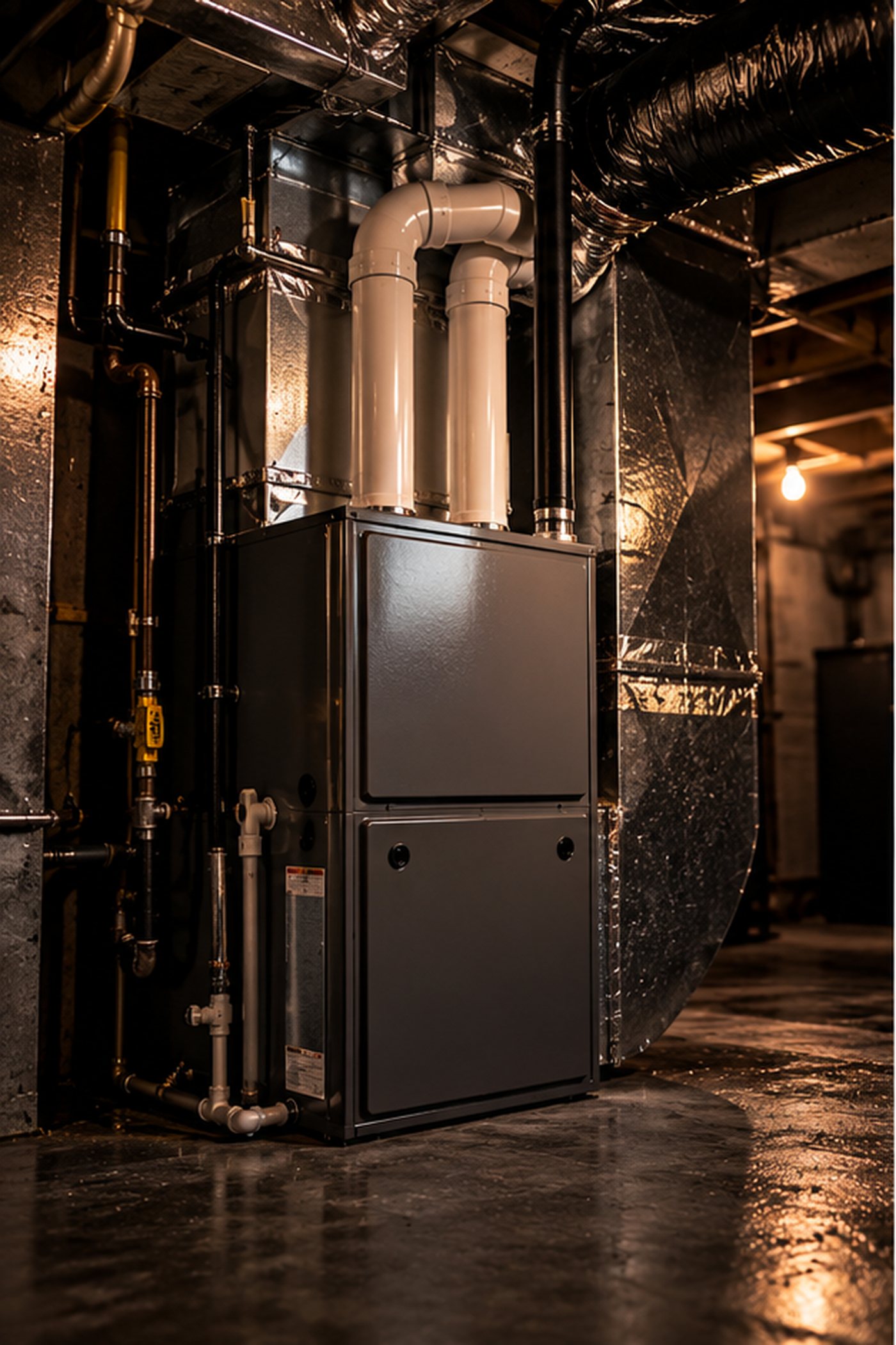
A home on the Ogden Valley floor near 4,300 feet and an identical home in the Ogden Valley above 5,000 feet carry different heating and cooling loads, which is why a Manual J calculation calibrated to elevation matters more here than in flatter markets.
From December through February, Weber and Davis County inversions trap fine particulate on the valley floor, and readings regularly exceed the EPA 24-hour PM2.5 standard of 35 micrograms per cubic meter, which makes home filtration a real health factor.
Air conditioners and heat pumps installed on or after January 1, 2025 use the R-454B refrigerant that replaced R-410A, so a home with an older R-410A system is at an active decision point when it faces a major repair.
Heating and cooling a home along the Northern Wasatch Front is not the same job it is in a flatter, milder market. An Ogden home can sit on the valley floor near 4,300 feet, climb the East Bench between roughly 4,500 and 4,800 feet, or stand up in the Ogden Valley above 5,000 feet near Pineview Reservoir, and each of those settings changes how a system has to be sized and run. Good HVAC service in Ogden starts with a contractor who understands the terrain and the hard winters and hot, dry summers that come with it. One Hour Heating & Air Conditioning of Ogden is an independently owned and operated One Hour franchise, owner-led by Matt McFarland, serving Ogden and the greater Weber and Davis County market with both the heating and the cooling a Northern Utah home depends on.
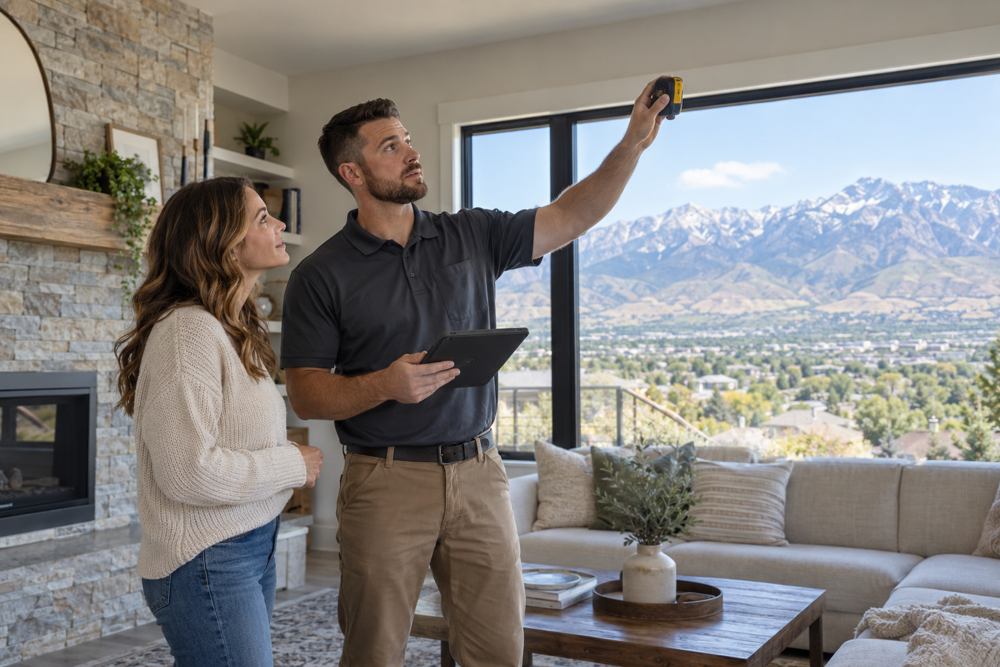
As the cold season arrives, heating moves to the front of most homeowners' minds, but a dependable system is a year-round relationship. The same company that keeps a house warm through a January inversion also keeps it cool through a July afternoon and keeps its air clean when the valley air turns bad. Reliable HVAC service in Ogden means treating the home as a whole rather than reacting one breakdown at a time.
The single most overlooked fact in Weber County comfort is that the same floor plan needs different equipment depending on where it sits. A new system should be sized with a Manual J load calculation, the industry method that measures a home's square footage, insulation, windows, and orientation rather than copying the old unit's capacity. That calculation also has to account for elevation, because a home on the Ogden Valley floor and an identical home up in the Ogden Valley do not carry the same heating and cooling load. A system sized by a square-foot rule of thumb, or simply matched to whatever was there before, often ends up the wrong capacity for its actual elevation, which is why some homes never feel balanced no matter how hard the equipment runs. Getting that right is the foundation of HVAC service in Ogden, and it is the difference between a system that holds temperature quietly and one that struggles for years.
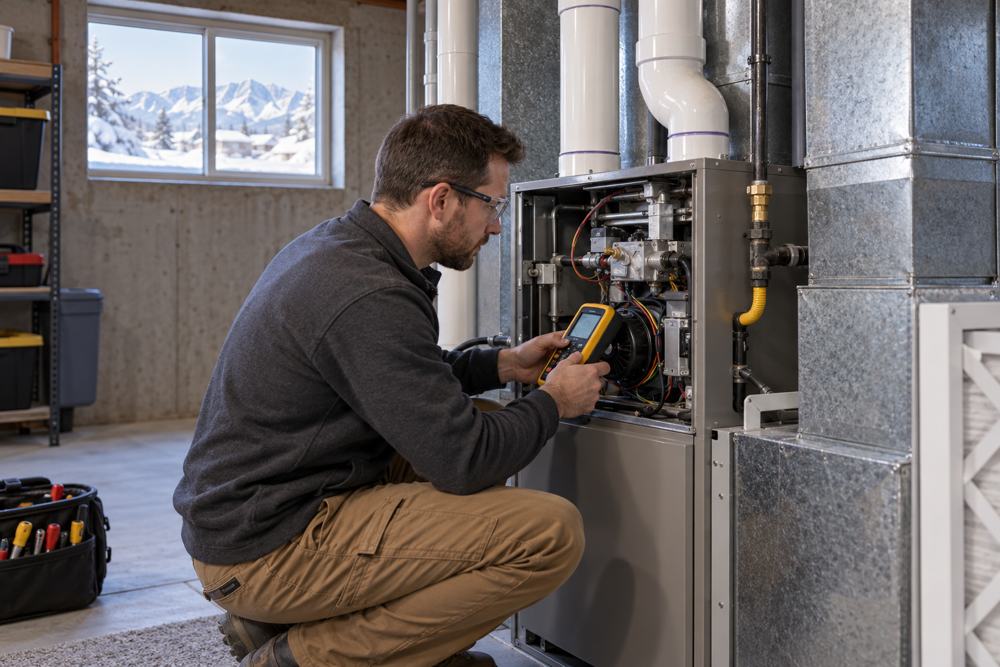
Winter is where a heating system earns its keep in this market. Weber and Davis County lows drop well below freezing through the heart of the season, and when a furnace quits on a cold night, the usual causes are an ignition module or flame sensor failure, a worn draft inducer, the small fan that pulls combustion gases through the heat exchanger before they vent outdoors, or a gas valve or blower motor that has given out. The most serious find during a fall tune-up or a no-heat call is a cracked heat exchanger, the chamber that keeps combustion gases separate from the air a home breathes, because a crack can leak carbon monoxide and make the system unsafe to run until it is addressed. A Washington Terrace ranch with its original furnace or an East Bench home with a twenty-year-old unit can both face that emergency decision in November.
For homeowners replacing heating equipment, the choices run from a condensing high-efficiency furnace with a secondary heat exchanger and PVC flue venting to a cold-climate heat pump, often configured as a dual-fuel hybrid that uses the gas furnace as auxiliary heat once the temperature falls below the heat pump's balance point. That dual-fuel approach matters at Ogden Valley elevation near Huntsville, where a heat pump not rated for cold climates can end up running expensive electric backup heat for much of the winter. One Hour Ogden sizes and installs both furnaces and heat pumps, and because no-heat events do not wait for business hours, the company dispatches around the clock, backed by its Always On Time Or You Don't Pay A Dime guarantee.
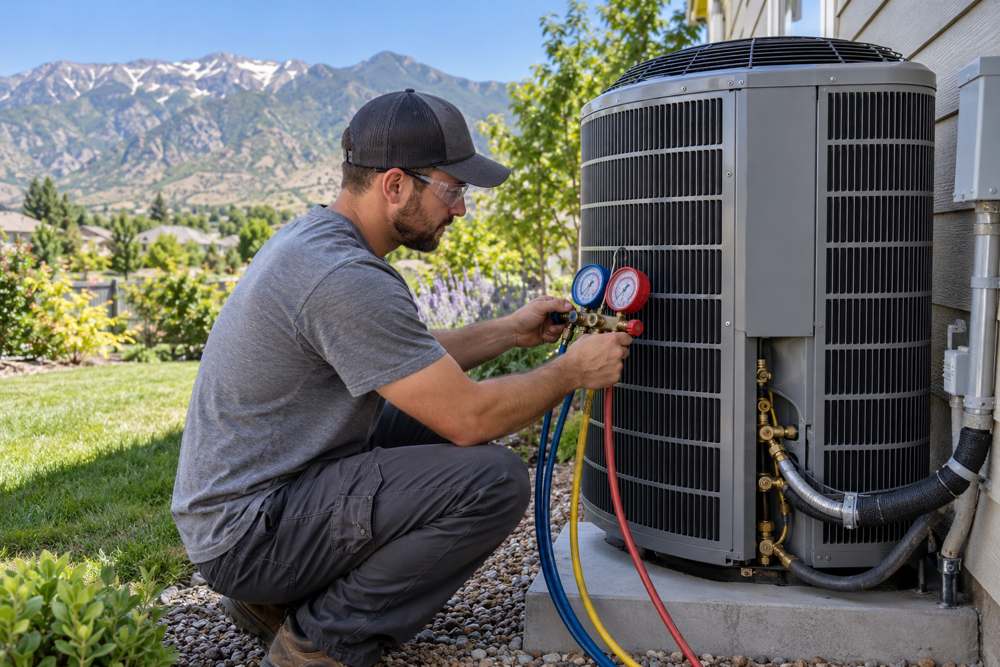
Cooling season is shorter here but still demanding, and the air conditioning side of HVAC service in Ogden is in the middle of a real change. New systems installed on or after January 1, 2025 use the R-454B refrigerant that replaced R-410A, while systems installed before that date run on legacy R-410A. That makes the current window an active replacement inflection: a homeowner facing a major repair on an older R-410A system has to weigh its age and refrigerant against the cost and efficiency of a new R-454B unit. Common cooling-season failures include a failed run capacitor or contactor, a refrigerant leak, a frozen evaporator coil, or a system short-cycling on the first hot afternoon, and a technician diagnoses whether a repair makes sense or whether replacement is the sounder path. A new system should again be sized by Manual J, and the current Utah SEER2 efficiency minimum should be confirmed at the time of install rather than assumed.
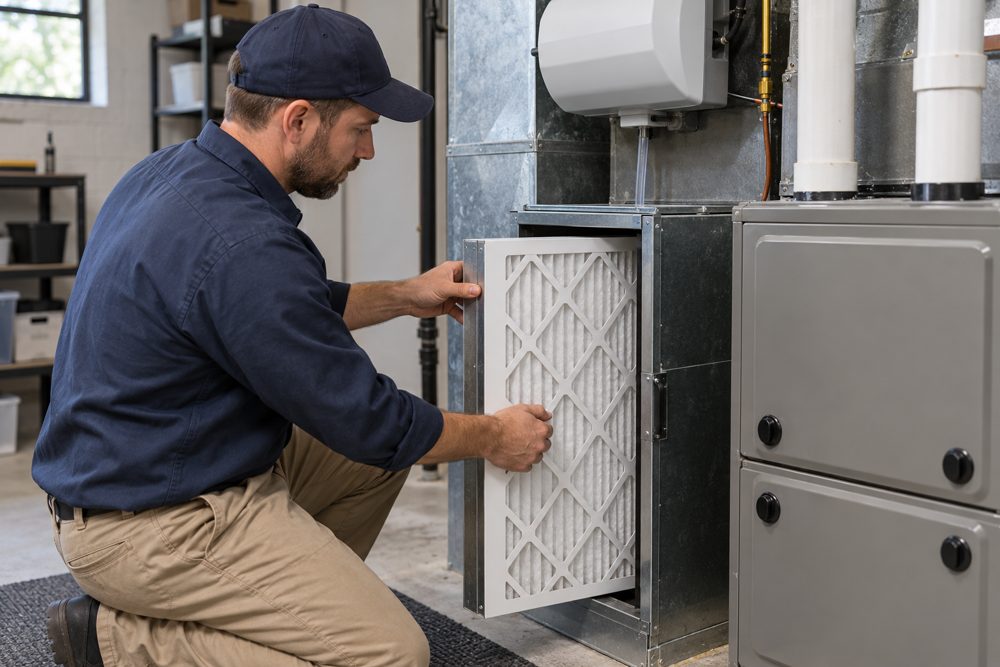
Few places make indoor air quality as concrete as the Northern Wasatch Front. From December through February, temperature inversions settle cold air onto the valley floor and trap fine-particulate pollution for days, and Weber and Davis County readings regularly push past the EPA 24-hour PM2.5 standard of 35 micrograms per cubic meter, with the Ogden valley floor periodically among the worst air in the country during a persistent inversion. During those stretches, the air indoors is only as clean as the home's filtration. Higher-MERV filtration, whole-home filtration, and a UV-C air sanitizer all reduce what circulates through a house, and a whole-home humidifier addresses the very dry air of a Northern Utah winter. These upgrades are a meaningful part of HVAC service in Ogden for anyone with allergies, asthma, or young children at home.
Comfort problems often trace to the parts of the system no one sees. Leaky or poorly designed ductwork sends heated and cooled air into the attic instead of the living space, so duct cleaning, duct repair, and duct installation are part of making a system perform the way it was sized to. For homes without existing ductwork, or additions and spaces a central system cannot reach well, a ductless mini-split system heats and cools a zone directly. One Hour Ogden offers ductless mini-split service alongside its central heating and cooling work, along with thermostat and zoning integration for setback scheduling and room-by-room comfort, which rounds out HVAC service in Ogden into coverage for the whole home.
Hiring well protects a homeowner more than any single feature of the equipment. Utah HVAC work runs under a state Specialty Contractor License, classification S350, which can be verified through the Utah Division of Occupational and Professional Licensing license lookup, and a legitimate contractor is also bonded and insured and pulls a mechanical permit for an installation. Beyond the paperwork, the signs of a contractor worth hiring are a proper Manual J calculation rather than a guess, written options and pricing before any work begins, and a track record a homeowner can check. One Hour Heating & Air Conditioning of Ogden is Utah Licensed, Bonded, and Insured, with EPA, RMGA, and BPI certified technicians, and carries a 5-star rating across more than 568 Google reviews.
What sets One Hour Ogden apart is a set of commitments a homeowner can hold the company to. The Always On Time Or You Don't Pay A Dime guarantee means that if the technician is even one minute late to the selected appointment window, the service call is free. The StraightForward Pricing guide presents upfront options and the full cost before any work begins, with no hidden fees. A 100 Percent Satisfaction Guarantee backs materials, labor, and craftsmanship for up to two years from the date of service. Financing is available, including a limited-time 0 percent financing offer on repairs and installations, and a lease-to-own option for challenged credit. As part of the national One Hour Heating and Air Conditioning franchise network but owned and run locally, the company pairs a recognized name with a West Weber owner who lives in the market it serves. For HVAC service in Ogden, from a no-heat emergency to a planned installation or a club membership maintenance plan, homeowners and businesses across Weber and Davis County can reach One Hour Heating & Air Conditioning of Ogden at (801) 829-7633 for 24/7 service and an on-time visit from a licensed local team.
Redirect to:
|
This page is a redirect. The following categories are used to track and monitor this redirect:
|
Start by confirming the contractor holds a Utah Specialty Contractor License, classification S350, which you can verify through the Utah Division of Occupational and Professional Licensing lookup, and check that the company is bonded and insured. A reputable contractor sizes a new system with a Manual J load calculation rather than a guess and pulls a mechanical permit for the installation. Comparing more than one written bid and checking a company’s reviews rounds out a sound decision.
Yes. One Hour Heating & Air Conditioning of Ogden dispatches 24 hours a day, seven days a week across Weber and Davis County, which matters most during a no-heat event on a cold winter night. The company also backs its appointments with the Always On Time Or You Don’t Pay A Dime guarantee, meaning if the technician is even one minute late to the selected window, the service call is free.
A home on the Ogden Valley floor near 4,300 feet, one on the East Bench between about 4,500 and 4,800 feet, and one in the Ogden Valley above 5,000 feet do not carry the same heating and cooling load, even with the same floor plan. A Manual J load calculation accounts for that elevation along with insulation, windows, and orientation, so the equipment is matched to the actual home. Sizing by square footage alone tends to miss that difference and leaves a system over or undersized.